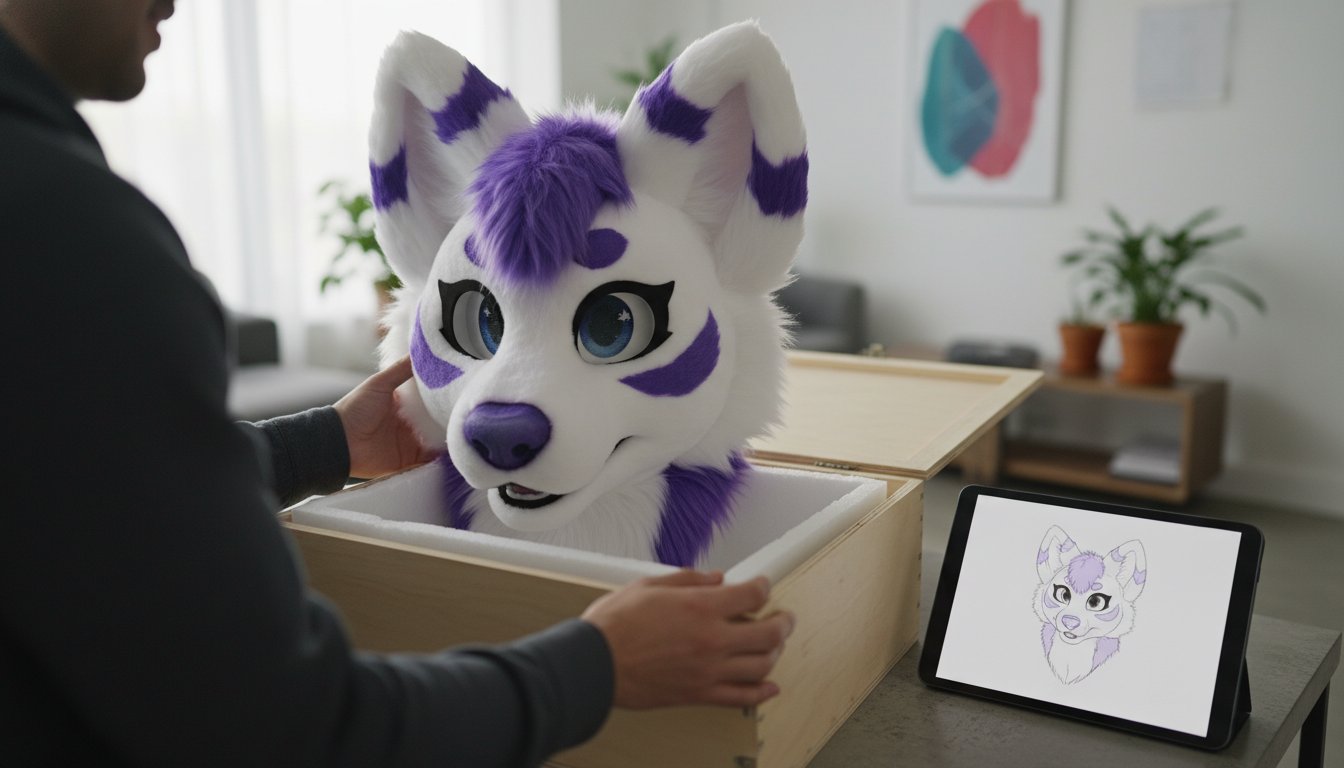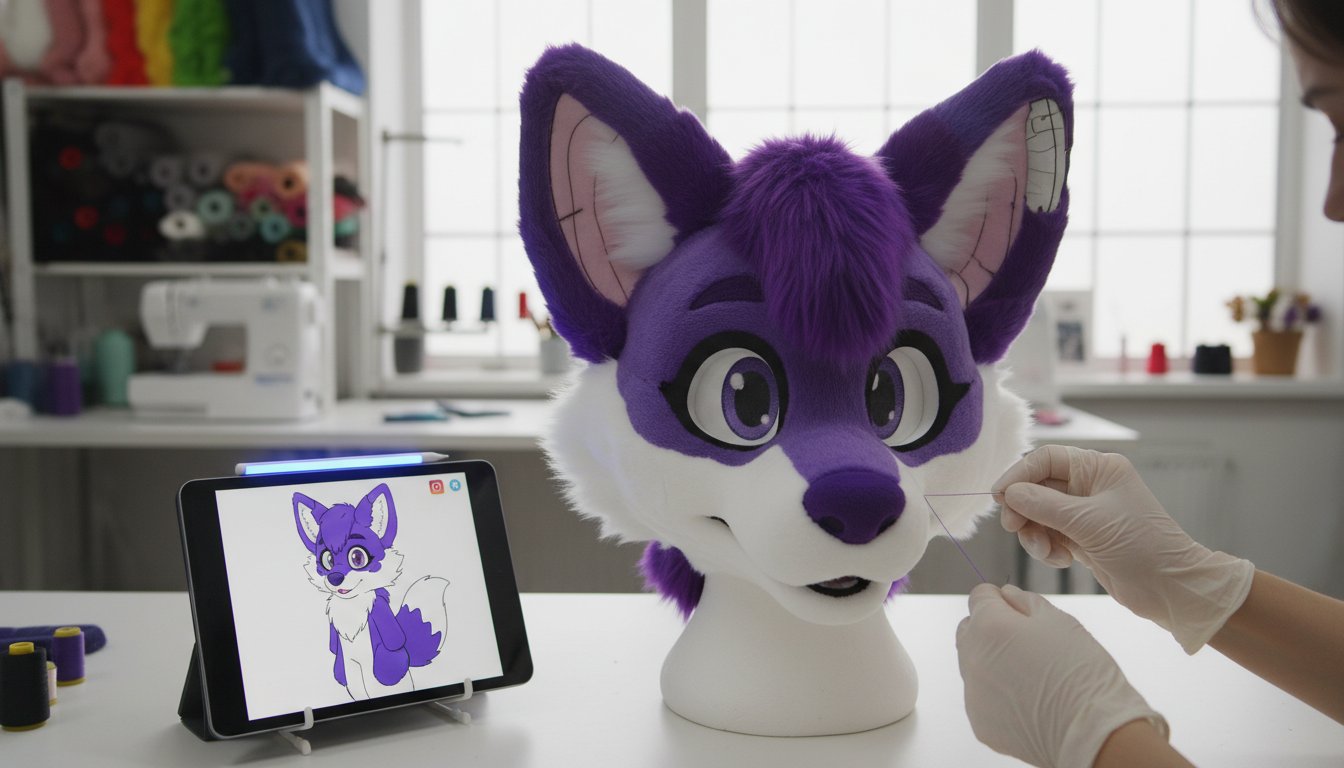
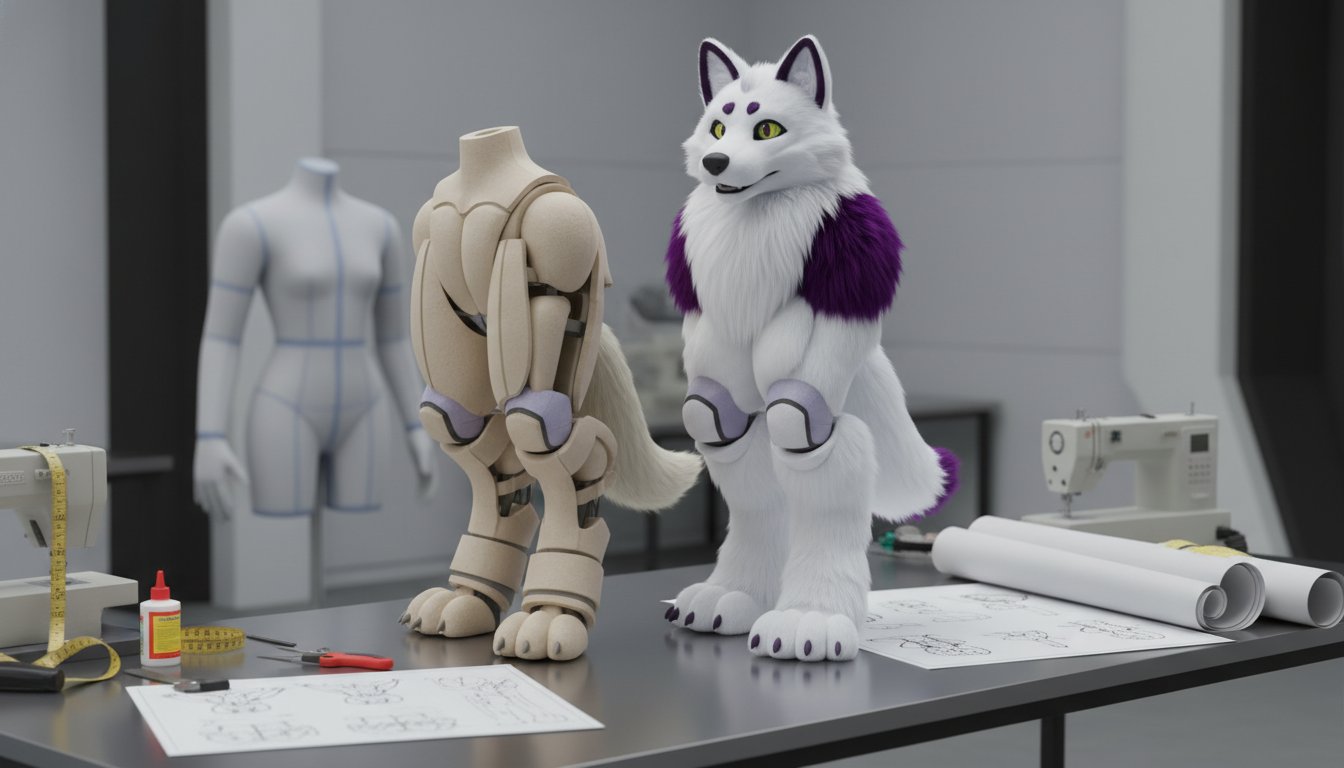
A successful digitigrade fursuit commission is a complex engineering partnership rather than a simple retail purchase. You want that striking, animal-like silhouette, but the fear of the "saggy diaper" look or overheating in layers of foam is a valid concern for any commissioner in 2026. It's natural to feel anxious about the measurement process for such intricate leg shapes. We understand that your vision requires both artistic flair and structural integrity to truly come to life.
By following this expert guide, you'll master the technical and creative requirements for a high-performance suit that fits your body proportions perfectly. We're going to demystify the internal padding architecture and the specific Duct Tape Dummy techniques needed for success. We will also cover the essential maintenance required to keep your padded legs looking sharp for years to come. From initial character reference sheets to the final delivery, you'll learn how to collaborate with a maker to achieve a professional, durable result.
Key Takeaways
- Understand the visual impact of digitigrade legs and why they are the standard for achieving a realistic animal silhouette.
- Learn the technical differences between padding materials to ensure your suit maintains its shape without sacrificing airflow.
- Evaluate the logistical trade-offs of a digitigrade fursuit commission, including practical considerations for mobility and storage.
- Master the specific techniques for creating a Duct Tape Dummy (DTD) to ensure your custom-tailored padding fits your body proportions accurately.
- Discover how specialized carving techniques prevent common silhouette issues while maximizing comfort during extended wear.
What is a Digitigrade Fursuit Commission?
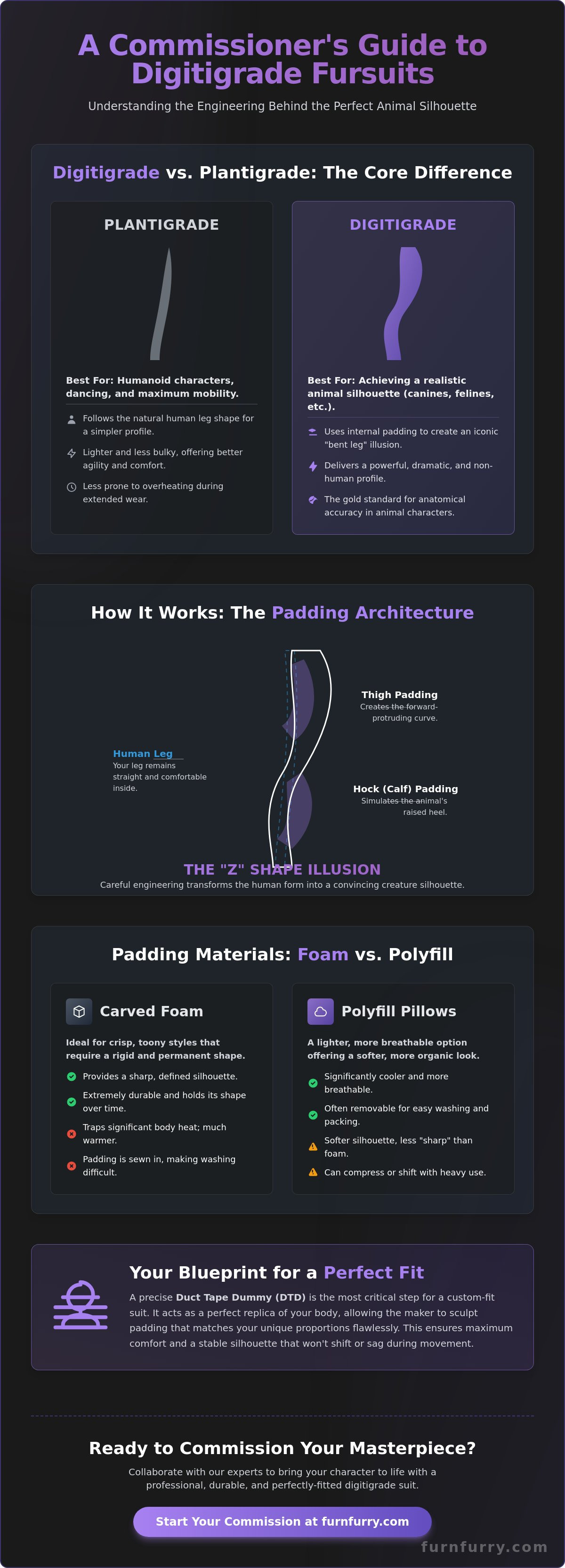
A digitigrade fursuit commission focuses on replicating the "toe-walking" leg structure found in many animals, such as wolves, cats, and dragons. Unlike plantigrade suits where the fabric follows the human leg's natural shape, a digitigrade design uses internal padding to create a distinct "Z" shape. This architectural choice mimics the hind legs of a quadruped, giving the wearer a more authentic, non-human silhouette. Even though your feet remain flat on the ground inside the suit, the external padding creates the illusion that your ankle is elevated and your knees are bent forward.
This style is widely considered the gold standard for both toony and realistic characters because of its dramatic visual impact. It effectively breaks the human profile, transforming the wearer into a more immersive creature. To understand the broader context of these custom creations and their role in the community, you can read more about What is a Fursuit? on Wikipedia. While a digitigrade fursuit commission requires more labor and material than a standard suit, the result is a striking, high-performance character that stands out at any convention or event.
Digitigrade vs. Plantigrade: The Visual Trade-off
Choosing between styles often depends on your character's personality and your personal comfort needs. Plantigrade suits are simpler, lighter, and offer better overall mobility because they lack extra bulk. They're great for "upright humanoid" characters or for those who plan to spend long hours dancing. In contrast, digitigrade suits provide that iconic "agile beast" look. While they're warmer due to the extra foam, they're essential for accurately portraying species like canines or felines. The choice is a balance between the ease of movement found in plantigrade and the anatomical accuracy of a digitigrade fursuit commission.
The Anatomy of the "Bent Leg" Illusion
The magic of the digitigrade look lies in the careful placement of foam or polyfill inserts. Thigh padding creates a forward-protruding curve, while calf or "hock" padding simulates the animal's raised heel. These components are strategically carved to ensure they don't collapse or shift during movement. A well-designed fur pattern then covers these inserts, using directional seams to hide the transition between your physical leg and the padding. This engineering ensures the illusion remains convincing from every angle, making the character look powerful and structurally sound.
The Engineering of Digi-Legs: Padding and Silhouette
Designing the lower half of a digitigrade suit involves more than just stuffing fur with soft materials. It is a precise exercise in structural engineering. Makers must ensure the "bent" leg silhouette remains stable throughout a full day of activity. Without proper internal support, the characteristic hocks can sag or shift, ruining the animal-like profile you've invested in. This structural foundation is deeply tied to the broader culture of fursona creation, furry art, and fursuits, where physical accuracy brings a digital character into the real world.
Material choice is the first major decision in any digitigrade fursuit commission. Most makers utilize high-density upholstery foam or custom-sewn polyfill "pillows" to build out the thighs and calves. Foam offers the most rigid and defined shape, which is ideal for "toony" styles that require sharp, exaggerated lines. However, foam is also a powerful insulator. It traps body heat against your skin, making these suits significantly warmer than their plantigrade counterparts. Polyfill pillows are a lighter alternative. They allow for better airflow and are often removable, which simplifies the washing process after a long convention weekend.
Weight is another factor that impacts the wearer's experience. While a single piece of foam is light, the cumulative weight of full-leg padding can lead to fatigue during long hours on the convention floor. This is why professional makers focus on "hollowing out" non-structural areas of the foam. By removing excess material from the center of a padding block, a maker can maintain the external silhouette while reducing the physical burden on the performer. This balance of volume and weight is what separates a high-performance suit from one that is difficult to wear.
Foam Padding vs. Pillow-Style Inserts
- Carved Foam: This method provides a crisp, permanent silhouette. It's the best choice for characters with very specific, non-negotiable anatomical shapes.
- Polyfill Pillows: These inserts are soft, squishy, and breathable. They offer a more "organic" movement and are significantly easier to pack for travel.
- Hybrid Systems: Some makers use a foam "core" for the hock and soft fill for the thighs. This provides stability where it's needed most while keeping the rest of the leg flexible.
Slim-Digi vs. Extreme Padding
The volume of your padding should reflect your character's species and build. Slim-Digi styles use subtle curves to suggest an animal shape without adding excessive bulk. This is a popular choice for lithe characters like felines or small foxes. It allows for a wider range of motion and easier navigation through crowded dealer dens. Full or Extreme Digi padding features massive, exaggerated hocks and thighs. This creates a powerful, heavy-set look perfect for large canines or monsters. If you're unsure which silhouette fits your vision, you can explore our options for a full fursuit commission to see how different padding levels affect the final look.
The Investment: Cost, Comfort, and Mobility
A digitigrade fursuit commission represents a significant step up in both financial investment and logistical planning. The increased cost isn't just about the extra yardage of faux fur. It covers the intensive labor required to carve anatomical padding and the complex pattern work needed to fit over those shapes. Since these suits are bulkier, you'll also notice higher shipping fees due to the sheer volume of the box. Beyond the initial purchase, you have to consider the physical toll of performance. Navigating stairs becomes a deliberate exercise in balance. Sitting down requires more clearance than a standard chair usually provides. If you're in a crowded dealer den, your wider profile means you'll need to be more mindful of your surroundings to avoid bumping into displays or other attendees.
Getting into your gear also takes more effort. While a plantigrade suit might slip on like a pair of onesie pajamas, a digitigrade bodysuit often requires careful alignment of the padding. You'll spend more time adjusting the inserts to ensure the hocks are symmetrical and the thighs are sitting at the correct height. There's also the matter of long-term durability. High-friction areas, particularly where the inner thighs rub together, are prone to "balding" over time. The tension created by the padding stretches the fabric backing, making it more sensitive to abrasion. Regular brushing and careful storage are mandatory to keep the fur looking plush during your digitigrade fursuit commission journey.
Is a Digitigrade Commission Worth the Premium?
- The "Wow" Factor: These suits consistently dominate masquerades and photo opportunities because they look like a living creature rather than a person in a costume.
- Psychological Impact: There's a psychological shift that happens when you step into the gear. The altered silhouette naturally changes your posture, helping you feel more immersed in your character's persona.
- Resale Value: From a financial perspective, full digitigrade suits tend to hold their value exceptionally well in the secondary market. The specialized engineering often attracts more interest from buyers looking for a high-end centerpiece.
Practical Limitations to Consider
You'll need to plan for the extra space these suits occupy. A digitigrade bodysuit can take up twice the storage volume of a plantigrade one, often requiring large, airtight bins to protect the foam from moisture and dust. Travel presents its own set of hurdles. Fitting a heavily padded suit into a standard checked bag is a puzzle that often requires vacuum bags or oversized luggage. Cleaning is also more involved. If your padding is sewn-in, the entire suit will take longer to dry. Removable padding is easier to manage, but it adds another step to your post-con cleanup routine. Understanding these trade-offs ensures you're prepared for the reality of owning a high-performance costume.
Preparing for Your Commission: DTDs and Reference Sheets
The success of your digitigrade fursuit commission relies heavily on the quality of the data you provide to your maker. Unlike a plantigrade suit that follows your natural leg line, a digitigrade bodysuit requires custom-carved padding that must align perfectly with your joints. Because we aren't meeting for in-person fittings, a Duct Tape Dummy (DTD) is the only way to ensure the internal structure fits your specific proportions. This physical mold acts as a three-dimensional blueprint, allowing us to build the "bent leg" illusion directly onto a replica of your body.
Precision during the preparation phase prevents the most common silhouette issues, such as hocks that sit too low or thighs that restrict your range of motion. If your measurements are off by even an inch, the padding might shift during movement, leading to the "saggy" look many commissioners fear. Beyond the physical mold, your character's visual design must be optimized for a 3D environment. Complex markings like symmetrical spots or wrap-around stripes can distort when stretched over large foam inserts. A well-prepared reference sheet helps us plan seam placements that preserve your character's markings without compromising the structural integrity of the padding.
Creating the Perfect Duct Tape Dummy (DTD)
An accurate DTD is the foundation of a high-performance suit. To get the best results, follow these technical steps:
- Wear Thin Gear: Use thin, form-fitting athletic wear. Bulky clothing underneath the tape will result in a suit that is too large and lacks definition.
- The Straight Leg Rule: Stand with your legs straight and shoulder-width apart. Don't mimic the digitigrade "crouch" while being taped; the maker needs your natural standing posture to calculate where the padding should go.
- Mark Your Joints: Use a permanent marker to indicate the center of your kneecaps and your ankle bones on the outside of the tape. This tells us exactly where your body bends inside the foam.
Optimizing Your Reference Sheet for a Maker
Your reference sheet is more than just a color guide; it's a technical document. For a digitigrade fursuit commission, we need to see the character from a direct side profile. This view allows us to determine the "intensity" of the padding, whether you want a slim, agile look or a heavy, powerful build. Including a "naked" anatomy view alongside the fur pattern is incredibly helpful for understanding the intended muscle structure. Additionally, please specify your preferred tail placement. Because digitigrade padding changes the curve of your lower back, the tail's attachment point must be carefully calculated to hang naturally. If you don't have a professional guide for your character's design, you can commission a Digital Character Reference Sheet to ensure every detail is ready for production.
Commissioning Your Digitigrade Masterpiece with FurNFurry
At FurNFurry, we treat every digitigrade fursuit commission as a unique engineering challenge. Our philosophy centers on the idea that a suit should look as good in motion as it does in a static photo. To achieve this, we've developed a custom padding system that prioritizes stability without adding unnecessary weight. We use high-grade materials that are specifically carved to maintain their shape over years of use, ensuring your character's silhouette remains consistent. Because we understand the heat challenges inherent in padded suits, our padding is designed to be as breathable as possible, incorporating ventilation channels that help move air away from your body.
Our collaborative design process ensures that your specific vision is translated accurately into a three-dimensional form. We don't just follow a template; we look at your character's unique anatomy and markings to determine the best padding placement. This methodical approach allows us to build a suit that feels like a natural extension of yourself. When you choose us for your project, you're partnering with a team that values precision, durability, and the excitement of bringing a fursona to life. We take pride in demystifying the complex custom process so you can focus on the creative realization of your character.
Why FurNFurry Specializes in Complex Silhouettes
We've spent years refining our techniques to master toony proportions. Our goal is to provide that "big and bouncy" look without making the wearer feel like they're lugging around heavy furniture. We focus on several technical pillars to ensure quality:
- Proportional Balance: We ensure the digitigrade legs complement the head and tail for a cohesive, aesthetically pleasing look.
- Reinforced Construction: We use reinforced seams at high-stress points, particularly around the inner thighs and hocks, to prevent wear and tear during active performance.
- Global Logistics: Since we opened our shop in 2026, we've gained extensive experience in packing these large, complex suits for safe worldwide transit. We use specialized packing methods to ensure your padding isn't crushed or deformed during shipping.
Next Steps: Get Your Quote
Ready to take the next step? Preparing for our commission openings is the best way to ensure a smooth process. First, visit our homepage to check our current commission status and see if we are currently accepting new projects. Having a clear, 3-view reference sheet ready will allow us to provide a more accurate quote and timeline. If you don't have one, we can help you create a Digital Character Reference Sheet to get started. Once your character's details are finalized, you can View our Digitigrade Portfolio and Start Your Journey with us. We're excited to help you realize your vision with a digitigrade fursuit commission that fits perfectly and looks incredible.
Bring Your Vision to Life in 3D
Bringing your character into the physical world requires a blend of artistic vision and structural precision. We've explored how internal padding architecture creates the iconic animal silhouette while maintaining the stability needed for a long day at a convention. You now understand that a successful digitigrade fursuit commission depends on an accurate Duct Tape Dummy and a detailed reference sheet to ensure every curve aligns with your unique anatomy.
FurNFurry is ready to be your collaborative partner in this creative journey. We specialize in high-mobility padding systems that prioritize both wearer comfort and a striking profile. Our team provides custom 3-view reference sheet support to help you finalize your design before production begins. Once your masterpiece is complete, we offer worldwide shipping with professional packing to ensure it arrives safely at your door. It's our mission to make the custom process transparent and rewarding for every client.
Commission Your Custom Digitigrade Fursuit at FurNFurry
We look forward to helping you step into your character with confidence and style.
Frequently Asked Questions
How much more does a digitigrade commission cost than plantigrade?
Digitigrade commissions generally cost more than plantigrade versions because of the increased labor and material volume. Makers spend additional hours carving anatomical padding and drafting complex patterns to fit over the extra bulk. Additionally, the finished bodysuit is physically larger, which often results in higher shipping costs. When budgeting for your digitigrade fursuit commission, expect to pay a premium for this specialized engineering and the extra yardage of fur required.
Can I wash a digitigrade fursuit in a standard washing machine?
You can wash a digitigrade bodysuit in a standard front-loading washing machine if the padding is removable. Most professional makers use a system of internal pockets or Velcro to allow for easy removal of foam or polyfill inserts. If the padding is sewn-in, you must hand-wash the suit in a bathtub to prevent the agitation cycle from damaging the foam structure or causing it to hold excessive water.
Is it hard to walk or run in digitigrade legs?
Walking and running in digitigrade legs requires more effort and balance than a standard suit. The extra width of the thighs and the protruding hocks change your center of gravity and your stride. While you aren't actually walking on your toes, the padding can make stairs and tight spaces challenging. Performers often practice their movements in a mirror to ensure their gait looks natural and animal-like.
Do I need a special Duct Tape Dummy for a digitigrade suit?
You need a standard full-body Duct Tape Dummy (DTD) for a digitigrade suit, but the accuracy is even more critical. Because the padding is custom-tailored to your joints, the maker needs to know exactly where your knees and ankles are located. You must stand with your legs straight and feet flat while being taped. Avoid crouching or bending, as this will distort the measurements and lead to a poor fit.
Can a partial fursuit be digitigrade?
A partial fursuit can be digitigrade if you commission "digi-legs" or a digitigrade lower half. These are essentially padded leggings or pants that match the character's fur pattern. While many partials are plantigrade for ease of wear, choosing a digitigrade fursuit commission for a partial allows you to maintain that iconic animal silhouette while wearing a lighter upper half or themed apparel.
How do I keep the padding from shifting while I am performing?
You keep the padding from shifting by ensuring the bodysuit fits snugly and using secure attachment methods. Professional makers often use internal pockets or snaps to lock the inserts into place. If you find the padding moving during high-energy performance, you can use specialized undergarments or light compression gear to provide a smoother, more secure surface for the padding to rest against.
What is the best species for a digitigrade fursuit look?
Canines, felines, and dragons are the most popular species for the digitigrade look. These animals have prominent hind-leg structures in nature, so the "bent leg" illusion feels anatomically correct for wolves, foxes, and big cats. Monsters and mythical creatures also benefit from extreme padding styles, as the exaggerated silhouette helps differentiate them from more humanoid characters.
How long does a full digitigrade commission typically take?
A full digitigrade commission typically takes several months to complete, depending on the maker's queue and complexity. The padding phase alone adds significant time to the production schedule because each piece must be hand-carved and symmetrical. It is best to check the maker's current status on their homepage to get a more accurate estimate of their specific turnaround times for the 2026 season.